

In the circles of automotive aesthetics, a new practice is gaining popularity, bringing an innovative perspective to the aesthetic preservation of vehicles: applying protection to a wet surface. This technique, which challenges traditional product application methods, is increasingly recognized for its potential benefits in terms of efficiency and results.
This blog takes a close look at this formal approach to automotive aesthetics, detailing the reasons why it excites car enthusiasts who prioritize excellence. Explore the nuances of this method, delve into its practical advantages, and familiarize yourself with essential recommendations to integrate this innovative approach into your car care routine. Prepare to adopt a formal and technical perspective on the future of automotive aesthetics with wet surface application.
The benefits of this technique:
- Uniform product distribution
When the surface is wet, water can act as a vector to evenly distribute the product on the bodywork. This could contribute to a more even application and complete coverage of the surface.
- Time-saving
By applying the product while the vehicle is wet, you can potentially save time by combining two steps into one. In other words, you don't have to dry your vehicle with a microfiber cloth before applying a protective product, such as Silverwax's Lustre Reviver. This can be particularly useful when you're short on time or don't want to linger on the aesthetics of your car.

How to proceed?
Adopting the wet surface application technique in your automotive aesthetics routine requires a methodical approach to maximize its benefits.
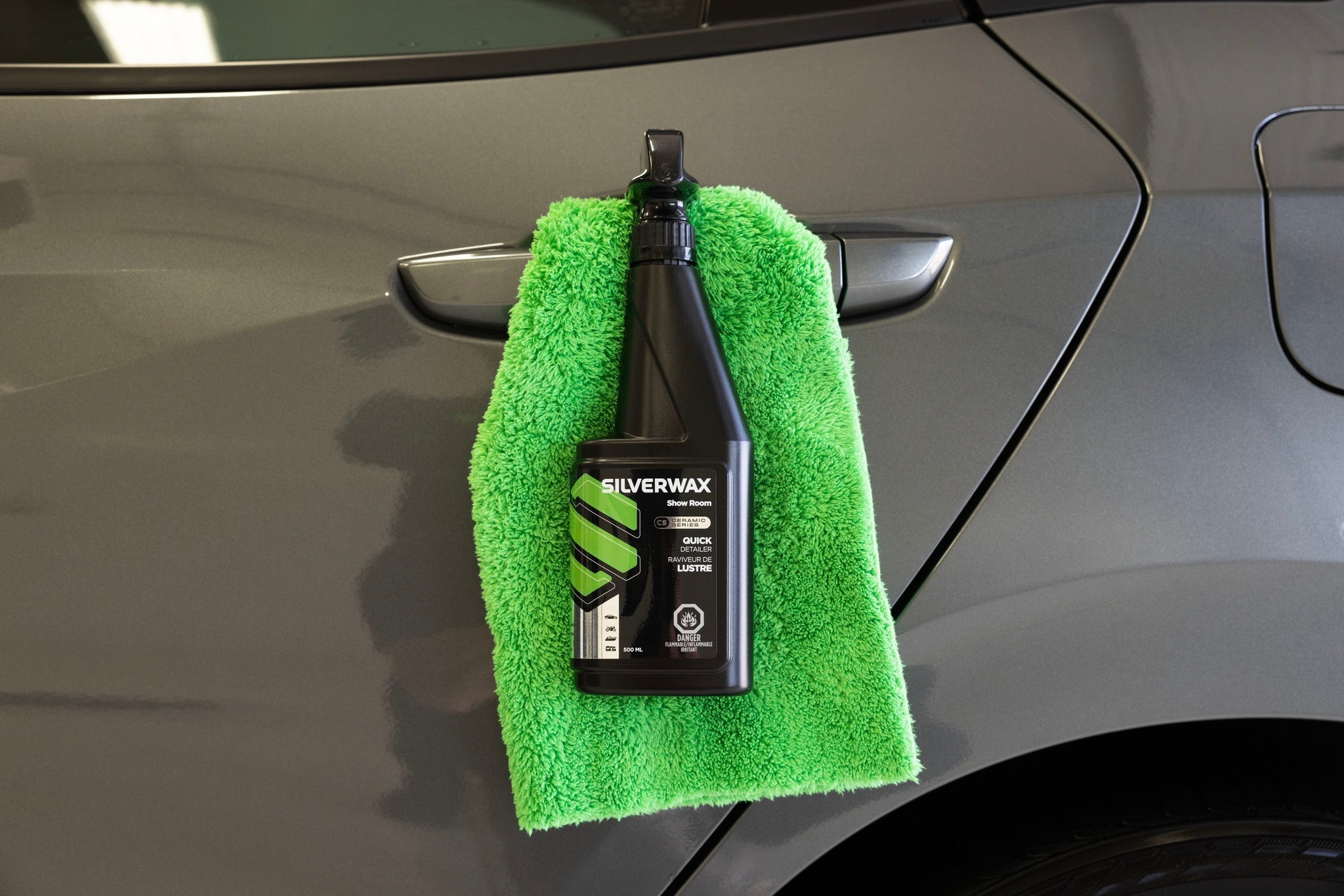
To begin, make sure your vehicle is freshly washed and still wet. Choose a quality product, such as Silverwax's Quick Ceramic Wax or a ceramic protection like Silverwax's Lustre Reviver, which are products suitable for this method.
Use the sprayer of your Silverwax product for an even distribution of the product. Work on specific sections at a time, generously spray the product on the still wet surface, making sure to cover the entire area.
Use your hose and spray water from bottom to top in bidirectional straight movements.
This approach ensures complete and uniform coverage while taking advantage of residual water to facilitate application.
More frequent application
However, it is essential to note that while wet surface application can offer undeniable practical advantages, it may also be associated with a reduced product lifespan compared to conventional methods.
The presence of water during application can potentially dilute the product concentration on the surface, which could affect the longevity of the protection. It is recommended to be aware of this characteristic and consider the application frequency accordingly.
Drivers should be prepared to renew the application periodically to maintain optimal protection. A clear understanding of these nuances will contribute to a judicious use of the wet surface application technique, allowing automotive enthusiasts to fully appreciate its benefits while managing expectations regarding the durability of the applied product.
In conclusion, delving into the world of wet surface application offers a new perspective in the field of automotive aesthetics. This bold approach promises considerable practical benefits, from uniform product distribution to evident time savings, to reducing the risk of water marks. However, the effectiveness of this method does not come without its share of nuances.
Adopting this technique requires a precise methodology. Through a meticulous sequence, from selecting the appropriate product like Silverwax's Quick Ceramic Wax to using a sprayer, to applying section by section, each step counts to fully take advantage of this innovative approach.
Share:
The Secrets of Scratch Prevention