

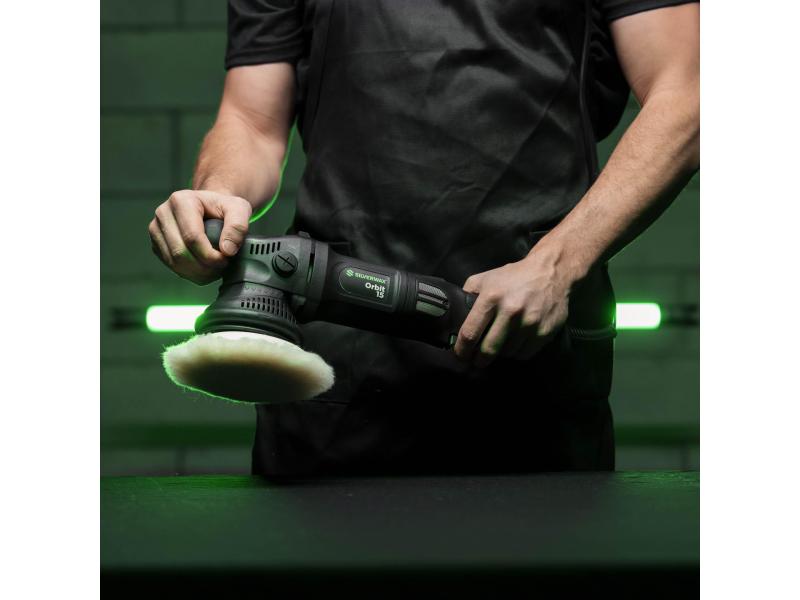
This blog aims to explore in-depth the captivating world of polishing pads. In this quest for aesthetic excellence, the team will delve into two distinct types of essential tools: foam pads, providing a secure and predictable polishing experience, and specialized pads examined for their complexity, invoking power and challenge.
Join us on this journey where perfection is the goal, and discover how choosing the right pad can make all the difference in polishing your car.
What is Automotive Polishing?
Automotive polishing is a crucial step in enhancing a vehicle's appearance, aiming to restore and improve the body's overall look. This technique involves removing paint imperfections such as micro-scratches, swirls, watermarks, and other defects that can diminish the original shine of the surface. By using specific abrasives and suitable polishing pads, you can smooth and even out the surface, revealing a brilliant finish. Polishing also enhances color depth, restores a car's luster, leaving behind a dazzling result that highlights the intrinsic beauty of the paint. It's a meticulous process that demands precision for optimal results, but the final outcome offers a remarkable transformation, restoring the car's original shine and leaving a lasting impression.
What is Polishing?
First and foremost, polishing helps maintain the brilliance and shine of the vehicle's body by eliminating imperfections like micro-scratches, swirls, and watermarks. Regular polishing preserves the paint from gradual deterioration caused by external factors such as UV rays, atmospheric contaminants, and bird droppings. 
Advantages of DIY Car Polishing
Polishing your car yourself has several advantages, both aesthetically and financially. Financially, DIY polishing offers a cost-effective alternative to professional automotive aesthetic services. Polishing kits and suitable pads are becoming more accessible, allowing enthusiasts to achieve remarkable results without incurring high professional labor costs.
Additionally, polishing your car yourself provides flexibility and complete control over the process, allowing individuals to accomplish something they might have perceived as unattainable. You can adapt the polishing frequency based on the specific needs of the car and choose the most suitable products. It also allows vehicle owners to develop their automotive aesthetic skills. In summary, DIY polishing offers a proactive approach to car maintenance, contributing to preserving the aesthetic value and paint quality of the vehicle.
Different Types of Pads Offered by Silverwax
- Foam Pads
Foam pads are made from foam of various densities and textures, designed to be attached to a polisher. Working with foam pads represents a meticulous approach to automotive polishing, prioritizing safety without compromising results. Although the process may take slightly longer compared to other methods, the advantage lies in the absence of associated risks. These pads offer exceptional handling ease, making the polishing experience accessible even for novices. An important consideration is the variation in the foam itself. The softer the touch, the more suitable the pad is for finishing steps, achieving impeccable shine while preserving delicate paint. Conversely, a firmer foam pad is perfect for correction work, effectively eliminating deeper body defects. In summary, the foam pad stands out as the most forgiving option, offering appreciable tolerance while providing a pleasant and controlled polishing experience.
- Microfiber Pads
Microfiber pads strike a balanced compromise between foam and wool pads, offering appreciated versatility in the world of automotive polishing. One notable feature of these pads is their ability to generate more correction compared to their foam counterparts, making them effective for more intensive correction work. However, their tendency to generate heat requires careful management, and it is strongly recommended to work with two pads simultaneously. This approach helps prevent pad deformation due to excessive heat, ensuring optimal performance during polishing. Another notable advantage of microfiber pads is their increased thickness, resulting in a more generous cushion. This feature facilitates navigation over the complex shapes of a vehicle and easily reaches more challenging areas. In summary, microfiber pads position themselves as balanced tools, combining power, control, and adaptability to meet various automotive polishing needs.

- Wool Pads
These pads, composed of natural or synthetic fibers, offer exceptional cutting ability, quickly resolving deeper paint defects. Wool pads represent a bold choice in the world of automotive polishing, reserved for experienced users seeking intensive correction. However, their power comes with increased requirements for skill and control. Wool pads are less forgiving of errors, and careless use can easily lead to damage such as deformation, breakage, or even paint tearing. As a result, their handling is recommended for experienced users who have gained a thorough understanding of polishing techniques. For those mastering the subtle art of automotive aesthetics, wool pads offer a formidable and efficient option but require additional expertise and caution to fully exploit their potential without compromising the body's integrity.
Specifications for Successful Polishing
The success of automotive polishing relies on a judicious combination of several factors, with pads representing only half of the equation. Indeed, the choice of polishing compound is also crucial for achieving impeccable results. Selecting a polishing compound tailored to the specific needs of the paint, whether for defect correction or finishing, largely determines the operation's success. However, it is not enough to have the right product; the amount of compound applied also plays a crucial role. A precise balance between the compound quantity and the pad's action is necessary to maximize the polishing process's efficiency. Too little compound can impede abrasive power, while excessive amounts can cause issues such as difficult-to-remove residues. Harmony between these two components is the key to successful polishing, fully leveraging the potential of the pad and compound for optimal brilliance and finish quality.
It is also wise to mention that the choice of the polisher can significantly contribute to your success, but this topic is covered in a specific blog on polishers. Silverwax has established a simple usage method to easily navigate through an infinite array of products. Each container is labeled with a number representing the step to follow during polishing. First, the Cutting Polish is the initial step for paint correction. Stamped with a 1 for reference, this is the most aggressive polishing compound. Its friable abrasive efficiently cuts while leaving a low luster finish. This step is for removing the "big" scratches. It is crucial to use the Finishing Polish afterward to optimize the result. The Finishing Polish aims to restore shine and depth to your paint. It also has a friable abrasive, but it is finer to ensure your paint is more than perfect. There is also the option to use the Hybrid Polish (1-step). This is a polishing compound that cuts more than step 1, leaving an incredible finish without surpassing that of step 2.
Do not forget that between each step, it is necessary to use the surface preparer to ensure that the correction is adequate and that there are no more scratches. This alcohol-based product will allow you to adequately see if the correction/polishing is well done. 
In conclusion, this blog has embarked on a thorough journey into the fascinating world of polishing pads, exploring the nuances between foam pads, microfiber pads, and wool pads. Each of these tools has been presented with its distinctive characteristics, highlighting their crucial role in achieving impeccable automotive aesthetics. While foam pads offer a secure and predictable experience, specialized pads demand increased expertise, reminiscent of the complexity of driving a Ferrari. Microfiber pads position themselves as a balanced compromise, offering versatility and control, while wool pads reserve their power for the skilled hands of the seasoned professional.
Beyond the pads themselves, this text emphasizes that the key to successful polishing lies in a meticulous combination of two essential elements: the pad and the polishing compound. The judicious choice of a polishing compound tailored to the specific nature of the paint is a crucial step. However, the balance between the amount of polishing compound and the action of the pad is equally vital. Measured application ensures optimal synergy between these components, maximizing the efficiency of the polishing process. Ultimately, this blog aims to enlighten automotive enthusiasts about the importance of these strategic choices to achieve a remarkable transformation of the body, revealing the intrinsic beauty of each vehicle.
Share:
Restoration Of The Exterior Plastics Of Your Car
Restoration Of The Exterior Plastics Of Your Car