

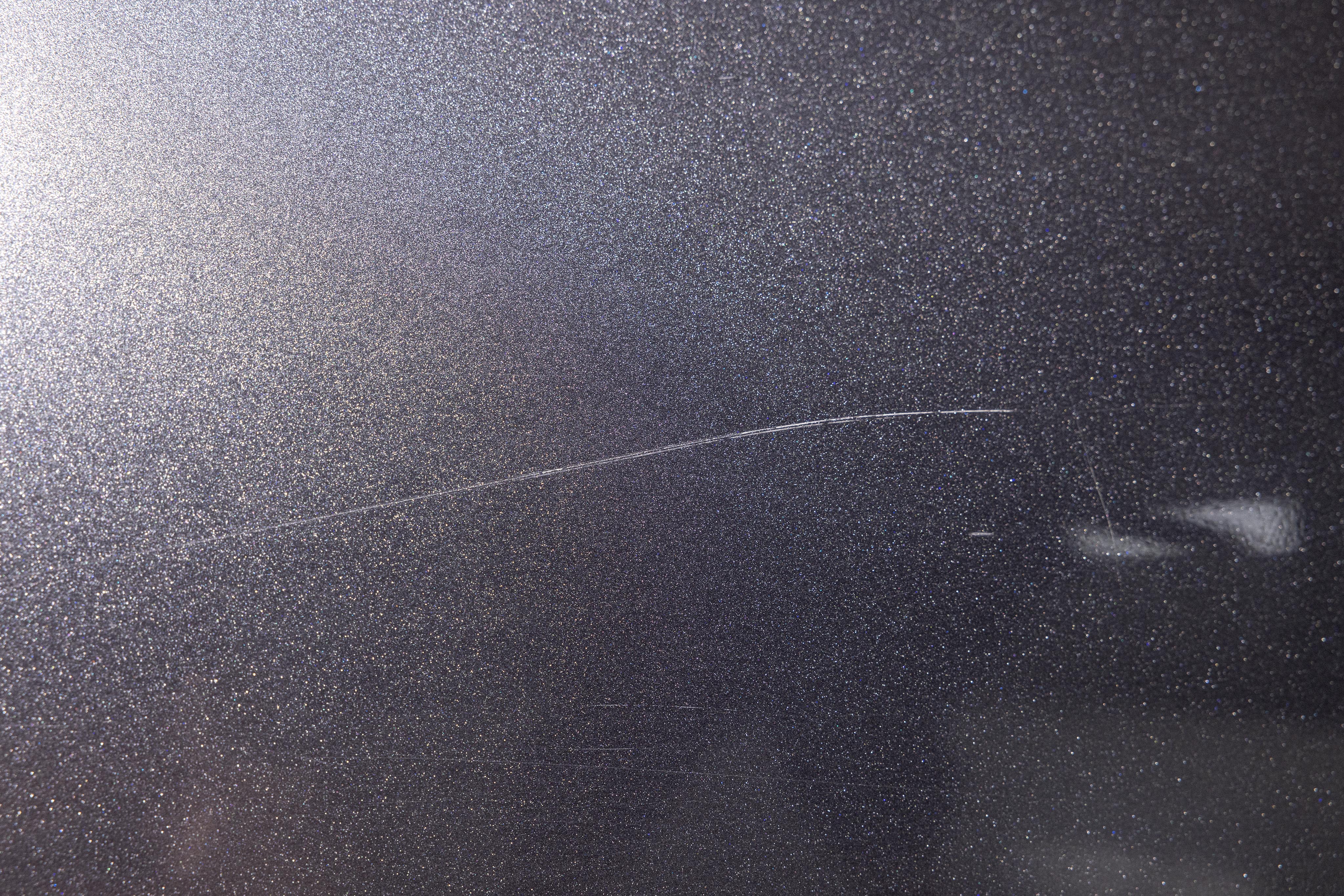
When you invest in a car, it becomes much more than just a means of transportation. It becomes an extension of your personality, a symbol of your lifestyle, and a precious asset that you cherish. Unfortunately, as time passes, even the best-maintained vehicles cannot escape the marks of daily life. Among the most insidious enemies of your car's shine and beauty are minor scratches.
These imperfections, often caused by incidents as trivial as a tree branch rubbing against the bodywork or a misplaced key, can quickly dull the appearance of your vehicle. However, do not let these minor scratches discourage you. In this blog, we will guide you through the essential steps to restore your car's splendor by eliminating these annoying imperfections.
What Is a Minor Targeted Scratch?
A minor targeted scratch is a surface imperfection, typically small and shallow, that affects the paint or finish of a vehicle. Unlike more significant damages like dents or paint chips, a minor targeted scratch is usually limited to a small specific area of the bodywork. It is often caused by accidental interactions with objects or abrasive materials, such as tree branches, keys, gravel, or similar items.
These minor scratches can be bothersome for vehicle owners who care about their appearance because they can alter the overall aesthetics of the car. However, they are considered minor because they generally do not affect the structural integrity of the bodywork and can often be repaired without resorting to expensive repairs. Vehicle owners often seek solutions to eliminate these minor targeted scratches to restore the beauty and value of their vehicle.
Among these targeted scratches, you may find paint marks from another vehicle on yours, marks left by your pants button, and more.

How to Determine if It's a Minor Targeted Scratch?
When examining a scratch on your vehicle's bodywork, the fingernail technique can be a useful tool to assess the severity of the impact. Gently run your fingernail over the scratch area. If you cannot feel any irregularity or change in texture with your nail, it's an indicator that it's probably a minor targeted scratch. Minor scratches tend to be superficial, meaning they have not penetrated deeply into the paint layer. However, if the scratch is not smooth to the touch, it could indicate that it is deeper and may require more intensive repair, such as machine polishing or paint filling. This simple tactile check can help you decide on the appropriate treatment to restore your vehicle's appearance.
How to Correct a Minor Targeted Scratch?
For light scratches, a polishing compound such as Silverwax's Scratch Off can be your best ally. This product is a cream with a microabrasive inside, meaning the more you apply it, the more it gradually diminishes.
Note that the finer the scratch, the more likely it can be completely eliminated, but if it is deeper, you can at least significantly reduce it.
It is important to perform this type of manual correction on small areas because the pressure and consistency of hand application on the bodywork are not as consistent as with a machine. Incorrect application can lead to the formation of holograms, which are undesirable circular marks on the paint.
To begin, equip yourself with an applicator pad. Gently apply the polishing cream to the pad (about the size of a quarter) and, with light pressure, start rubbing the scratch area in circular motions. This technique gradually polishes the scratch until it is minimized.
After polishing, use a microfiber cloth to wipe off the excess compound. It is crucial to carefully examine the scratch's condition at this stage. If it has not completely disappeared, it may be necessary to apply a second or even a third layer of manual polishing using Silverwax's Scratch Off, repeating the process until satisfied.
However, if the scratch persists despite these efforts, it is time to move on to more advanced measures. You can consider using a more aggressive compound with a polisher or even touch-up paint to completely mask the blemish. This meticulous approach ensures that each minor targeted scratch is treated with care, thus guaranteeing optimal restoration of your vehicle's beauty.

The Crucial Step of Applying Protection
Applying protection after correcting a minor targeted scratch is crucial in the process of restoring your vehicle's bodywork. This step is often overlooked, but it offers significant benefits. Protection, in the form of wax, sealant, or ceramic coating, acts as a shield that preserves the regained beauty of your car. It creates a barrier between the restored paint and external aggressions such as UV rays, dirt, acid rain, and road contaminants. Therefore, if you happen to scratch the vehicle again, the applied protection will minimize the severity of the scratch and make it easier to remove! The Ceramic Series offers several products that will undoubtedly protect your vehicle!
Furthermore, protection enhances the durability of the correction you have made to the scratch. It prevents the rapid reappearance of new imperfections and maintains the new look of your vehicle in the long term.

In conclusion, correcting minor targeted scratches on your vehicle is an essential step to preserve its beauty and value. Thanks to a careful assessment of the scratch's severity and the judicious use of polishing compounds, you can reduce these imperfections to an almost invisible level. However, never forget the crucial step of applying adequate protection afterward. This not only preserves the result of your work but also protects your car from external aggressions, thereby extending the durability of your correction.
Share:
Headlight Restoration 101
Headlight Restoration 101